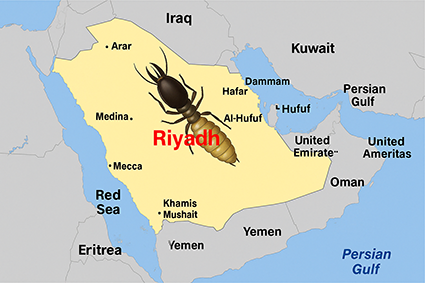
Termite distribution in Saudi Arabia
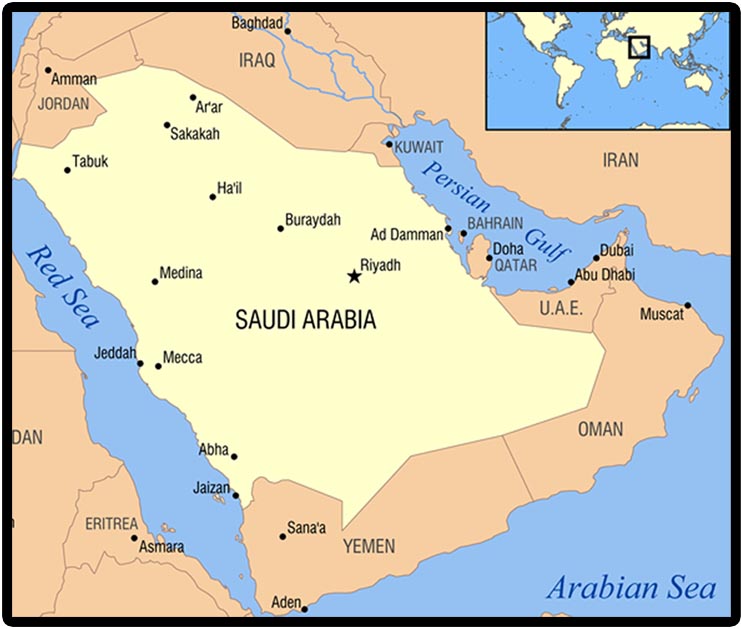
The Kingdom of Saudi Arabia lies between latitudes 12° and 32° North and longitudes 35° and 65° East. It is considered part of the arid and semi-arid regions, with deserts covering a large portion of its land area.
Studies have recorded the presence of 12 to 18 termite species in the Kingdom, belonging to 10 genera under 4 different families. These termites are distributed across most regions of the country and inhabit a variety of hosts, including dry cellulose sources, live plants, and other organic materials.
1- Family: Kalotermitidae
This family is represented by a single genus, Epicalotermes.
It is well known that members of this family do not typically inhabit arid regions, but they may attack certain trees such as Acacia, Tamarix (Athl), and structures located near coastal areas or river valleys, where they build their nests within their host materials.
In Saudi Arabia, there is one recorded species, Epicalotermes aethiopicus, whose distribution extends into southern Yemen and the southern regions of Saudi Arabia.

2- Family: Hodotermitidae
This family is represented by a single genus, Anacanthotermes, whose species are restricted to arid and semi-arid regions.
This genus is found throughout most parts of Saudi Arabia, except for areas south of approximately latitude 19° North.
Three species of this genus are recorded in the Kingdom:
1. Anacanthotermes ochraceus
This is the most widespread species in the Kingdom.
It has been recorded in the following areas:
Jeddah, Madinah, Taif, Wadi Khulais, Wadi Hanifa, Dammam, Wadi Thamir, Al-Laith, Al-Qunfudhah, Turaif, Arar, Al-Qurayyat, Sakaka, Al-Qunaitirah, Al-Hofuf, and some parts of the central region.
2. Anacanthotermes vagans
This species has been reported in:
Al-Kharj, Wadi Hanifa, Al-Majma’ah, Unaizah, Hail, Tabuk, Al-Hofuf, Khaybar, and Al-Suwaidrah.
3. Anacanthotermes ubachi
The presence of this species in Saudi Arabia is limited, and it has been found in the Marat region.

3- Family: Rhinotermitidae
This family is represented by a single genus, Anacanthotermes, whose species are limited to arid and semi-arid regions.
This genus is distributed throughout most parts of Saudi Arabia, except for areas south of approximately latitude 19° North.
Three species are recorded in the Kingdom:
1. Anacanthotermes ochraceus
The most widespread species, found in:
Jeddah, Madinah, Taif, Wadi Khulais, Wadi Hanifa, Dammam, Wadi Thamir, Al-Laith, Al-Qunfudhah, Turaif, Arar, Al-Qurayyat, Sakaka, Al-Qunaitirah, Al-Hofuf, and parts of the central region.
2. Anacanthotermes vagans
Found in:
Al-Kharj, Wadi Hanifa, Al-Majma’ah, Unaizah, Hail, Tabuk, Al-Hofuf, Khaybar, and Al-Suwaidrah.
3. Anacanthotermes ubachi
Rare in Saudi Arabia, reported only in the Marat region.

4- Family: Termitidae
2. Genus: Amitermes
This genus is found in some parts of the central, northern, western, and southern regions of Saudi Arabia,
but it has not been recorded in the eastern region.
Three species have been reported in the Kingdom:
Amitermes messinae:
Recorded in the Jazan region.Amitermes vilis:
Found in Na’jan, Wadi Hanifa, Hail, and Dumat Al-Jandal.Amitermes stephensoni:
Recorded on a dry palm offshoot in the Bisha area.
3. Genus: Eremotermes
This genus includes a single species, Eremotermes sabaeus,
which is found in the southern part of the Arabian Peninsula.

B. Subfamily: Termitinae
This subfamily is represented by a single genus, Angulitermes, and a single species, A. arabiae.
This species is known for feeding on soil and dung.
The only collected specimen was found in the village of Al-Qur’ah, in the Asir Mountains.
It has a very limited distribution, and most reports suggest it is usually found within the nests of other termite species.
C. Subfamily: Macrotermitinae
This subfamily is represented in Saudi Arabia by the genus Microtermes.
It is found in the western and southern regions, and some parts of the central region, including Riyadh, Dirab, Al-Kharj, Al-Houta, and Sudair.
This genus includes the most harmful species to living agricultural crops.
Two species are recorded:
1. Microtermes najdensis
The most widespread species in the mentioned regions.
It is the primary pest of irrigated crops.
Recorded in: Wadi Khulais, Huda Al-Sham, Zima, Jazan, Abu Arish, and Hakimah.
2. Microtermes yemenensis
Reported in the Dirab region.
D. Subfamily: Nasutitermitinae
This subfamily is represented by a single genus, Trinervitermes, with one known species:
T. saudiensis (synonymous with T. arabiae).
This species has been found in the Jeddah area,
Specifically in desert lands on dry grasses.

Hosts Attacked by Termites in Saudi Arabia
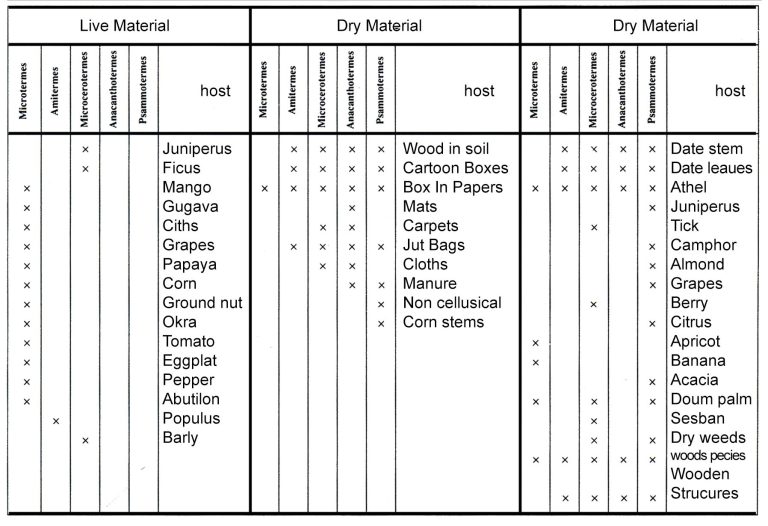
The following table shows the types of hosts, whether dry materials or living organisms, that are attacked or inhabited by the various termite species in the Kingdom of Saudi Arabia.
Signs of Termite Infestation in Saudi Arabia
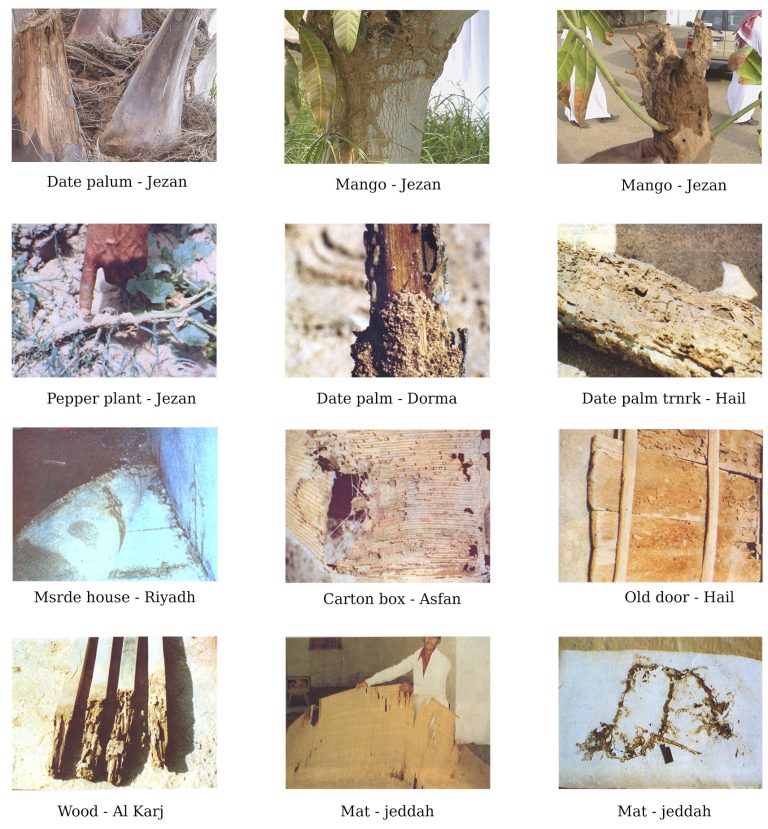
The following images illustrate the damage caused by termites to various dry materials and living plant matter in different regions of the Kingdom.
General Notes on Termite Distribution in Saudi Arabia
Observations on Termite Distribution in Saudi Arabia
Termites are distributed across all regions of Saudi Arabia without exception, and they attack a wide variety of materials in buildings as well as agricultural crops.
The distribution and prevalence of termites in the Kingdom are influenced by various ecological factors, such as vegetation cover, rainfall levels, land topography, and temperature. Examples include:
A – The following four genera:
Amitermes
Microcerotermes
Psammotermes
Anacanthotermes
These genera share very similar environmental requirements.
They prefer areas with sparse vegetation made up of grasses and scattered shrubs, annual rainfall between 50–150 mm, and an average annual temperature of 22–26°C.
B – The genus Microtermes
In contrast, Microtermes prefers:
Plains with soft, loose soil,
Dense vegetation, including trees, shrubs, and grasses,
Higher rainfall levels, between 250–500 mm,
Higher average annual temperatures, ranging from 26–30°C.