Termites Systematics
About 2,800 termite species are recognized, classified in seven families. These are arranged here in a phylogenetic sequence, from the most basal to the most advanced:
- Mastotermitidae (1 species, Mastotermes darwiniensis)
- Hodotermitidae (3 genera, 19 species)
-Hodotermitinae
- Kalotermitidae (22 genera, 419 species)
- Termopsidae (5 genera, 20 species)
– Termopsinae
– Porotermitinae
– Stolotermitinae
- Rhinotermitidae (14 genera, 343 species)
– Coptotermitinae Holmgren
– Heterotermitinae Froggatt
– Prorhinoterminae Quennedey & Deligne, 1975
– Psammotermitinae Holmgren
– Rhinotermitinae Froggatt
– Stylotermitinae Holmgren, K & N, 1917
– Termitogetoninae Holmgren
- Serritermitidae (1 species, Serritermes serrifer)
- Termitidae (236 genera, 1958 species)
– Apicotermitinae (42 genera, 208 species)
– Foraminitermitinae (2 genera, 9 species)
– Macrotermitinae (13 genera, 362 species)
– Nasutitermitinae (80 genera, 576 species)
– Sphaerotermitinae (1 genera, 1 species)
– Syntermitinae (13 genera, 99 species)
– Termitinae (90 genera, 760 species)
Major Families:
- Rhinotermitidae (Subterranean termites) — These insects build nests in the soil and generally infest wood that is in contact with the ground. This family includes the most destructive species Reticulitermes flavipes, R. hesperus, Coptotermes formosanus.
- Hodotermitidae (Rottenwood termites) — Generally found inhabiting moist wood. Contact with the soil is not a requirement. This family includes the Pacific dampwood termite, Zootermopsis angusticollis.
- Kalotermitidae (Drywood and dampwood termites) — These insects nest in the wood itself and do not require contact with the soil. Pest species include the western drywood termite (Incisitermes minor) and the forest tree termite (Neotermes connexus).
- Termitidae — This is the largest family of termites worldwide, but all of the species are relatively minor in importance.
Major Groups
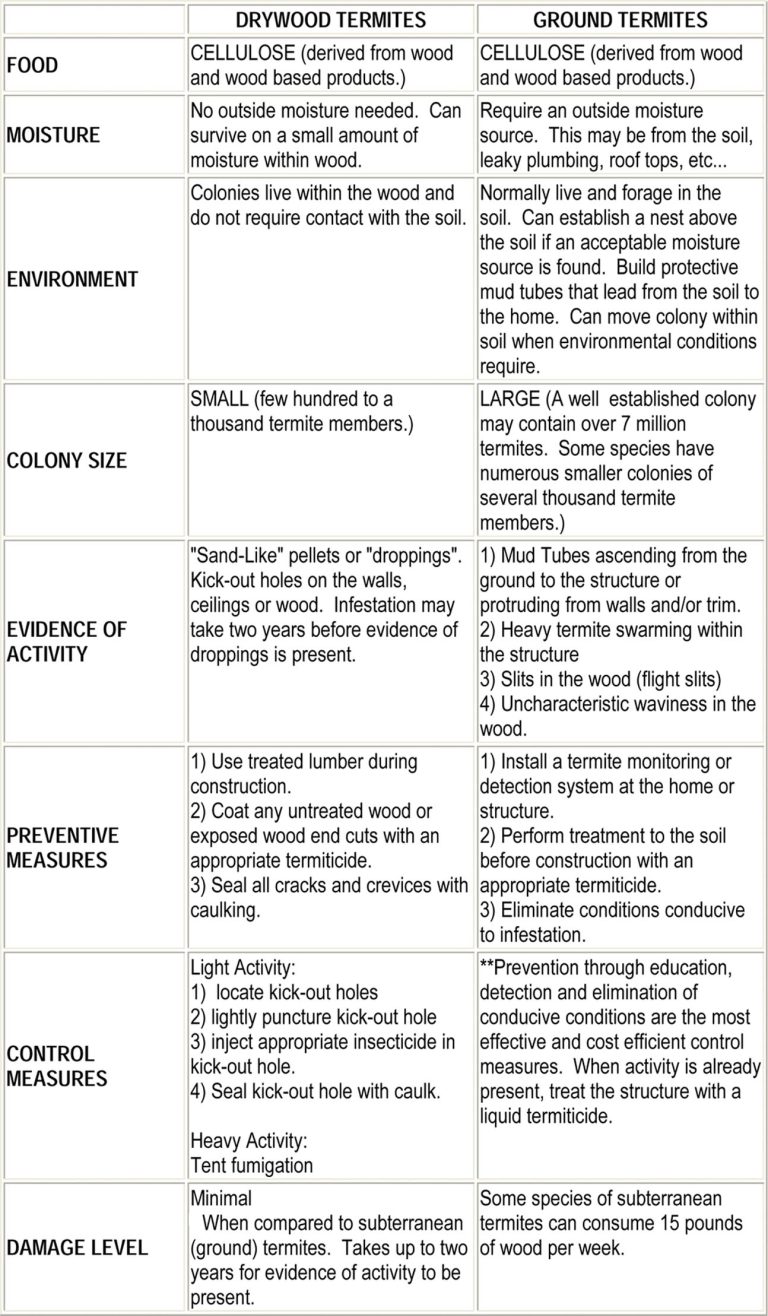
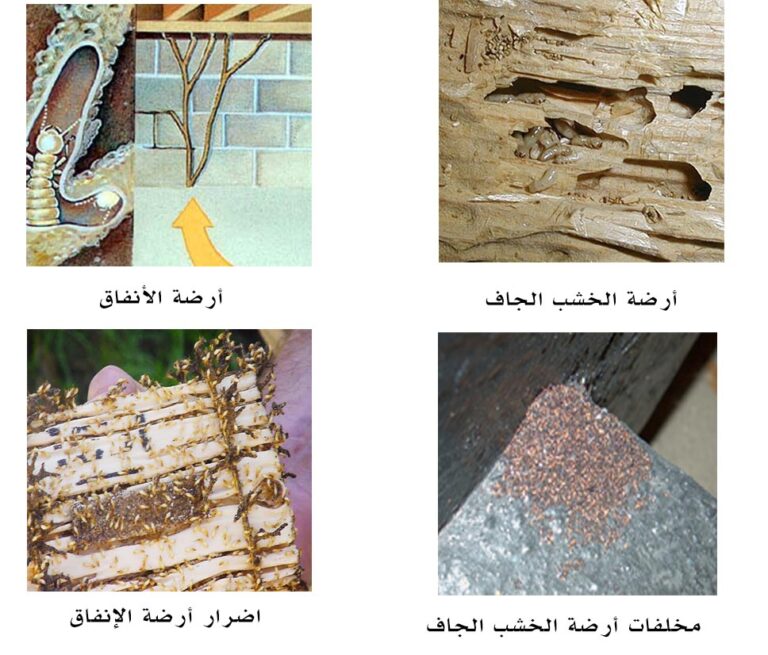
There are two main groups of termite namely the subterranean termite, drywood termite . They include the most destructive species of termites. They are primarily responsible for the damage to human made structures.
Below you will see the obvious differences between them.